Miyazaki and the Master of the Crypt
Spores come down in the Sea of Corruption like snow that has forgotten how to melt, and a girl in a mask finds the cast-off shell of an Ohmu, lying in the moss with light coming through its old eye-lenses like glass. She knocks on it.
It rings hollow.
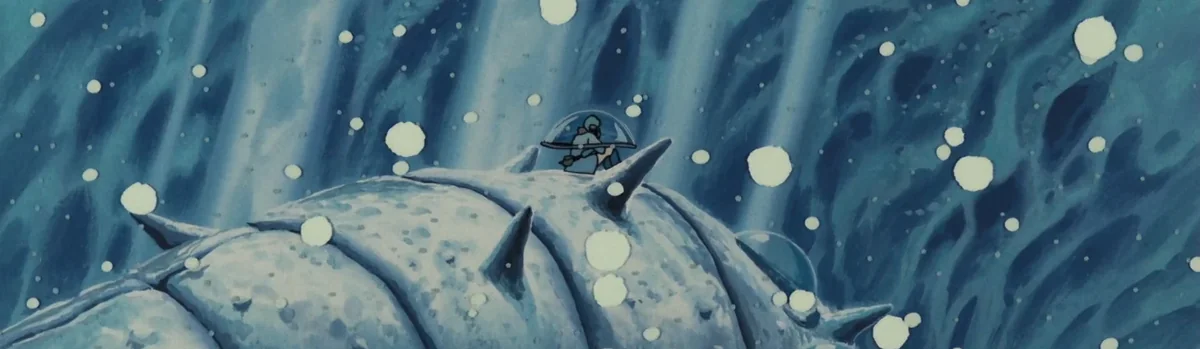
1. Of Things We See in Nature
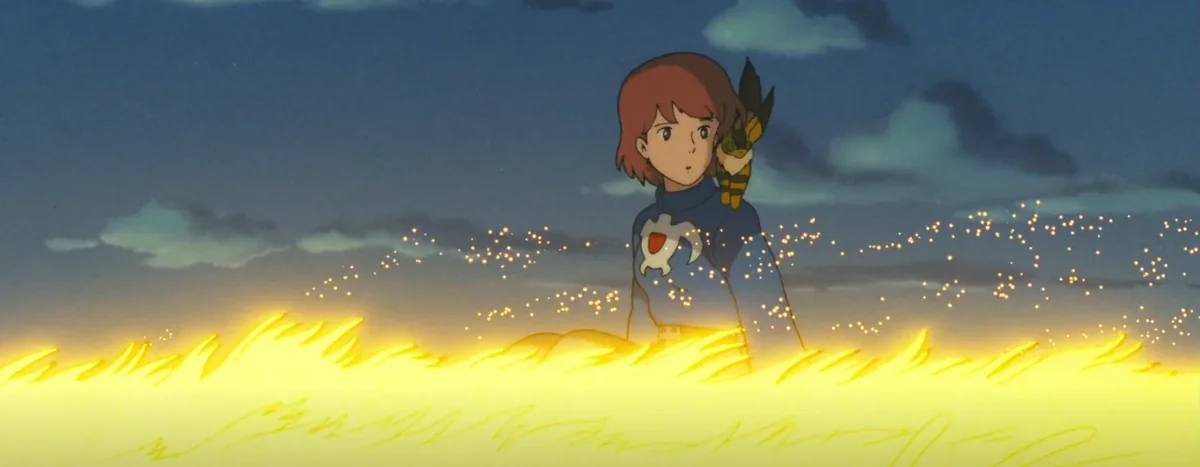
At the film’s climax a herd of enraged, red-eyed Ohmu stampedes toward the Valley, because the Pejites have used their wounded calf as bait to drive the herd onto the Tolmekian army occupying it. Nausicaä returns the calf and stands before the herd, which runs straight through her⸺ and yet the stampede slows, their eyes turn from red to blue, and golden tendrils rise from their mouths to lift her as she wakes up. She walks across them in a blue dress and the blind old woman of the Valley understands that an old prophecy has come true. It is a very touching sequence.
And I started to wonder⸺ what is it, exactly, that gets me? I love Miyazaki’s art, yet I dislike his romanticism, and perhaps the kind of man he can be to those around him.1 I am not here to “debunk” him. This essay is about Miyazaki only insofar as he shows something in all of us⸺ how the love of something good, once it becomes absolute, turns upon the people who fail it. Miyazaki knows this; he even drew it, a master sealed in a crypt, and for all his wisdom⸺ he was not spared by it. But can we love art shaped by a philosophy we reject?
There are Romantics who believe the way they love nature makes them better than the rest of us, more enlightened. They insist nature is beyond good and evil, yet build exactly those categories around their love of it, against other humans⸺ ”to look past the face and love the insect, the forest, the fungus is better; one who cannot is failing in moral imagination.” Miyazaki’s own wife, the person closest to him, becomes the object of his moral disdain for the ordinary act of gardening, which he calls “fascism.”2 Yet he at least retains the self-awareness to admit that he cannot fix anything but only complain. His fans are often less self-aware.
His self-awareness is perhaps why those of us who disagree with him can still love his art. His villains are rarely villainized completely. He gives them nuance and reasons, and sometimes they seem almost innocent of their villainy. They ally with the protagonist, drift into irrelevance, or accept defeat almost gleefully, without resentment or consequence. Some call this bad writing. I think it is part of the magic⸺ fiction is not reality, and not every defeat needs a wound. Miyazaki does not seem to hate those who oppose his ideas, his enemies of nature may be wrong and defeated, but never objects of resentment, and so never depicted resentful themselves. In this he differs from activist stories whose hatred repels others from their cause.
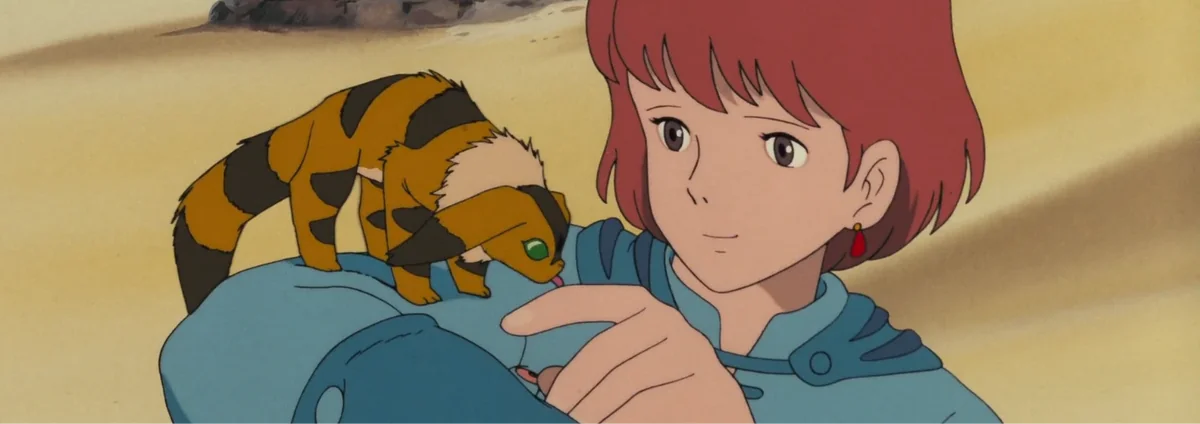
So why do I love his work so much? Perhaps because the Ohmu tell a story we already know, of parents, gratitude and forgiveness, one of the oldest stories we have⸻
2. Of Eyes That Are Not Eyes
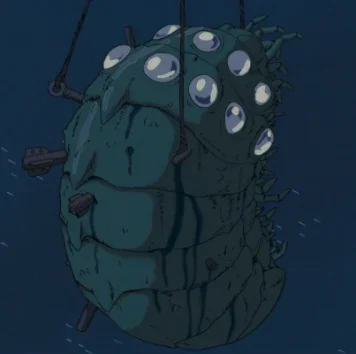
Look at the Ohmu’s eyes. There are fourteen of them, not human at all, yet they reveal something all the more human⸺ blue when calm, red in rage, grey when stunned or dead. Miyazaki gave the creature no human face, but the colors tell the same emotional truths a face would. Everything else they do is legible the same way. They protect their young, rage when their child is hurt, sense what is in a heart, and take a liking to Nausicaä.
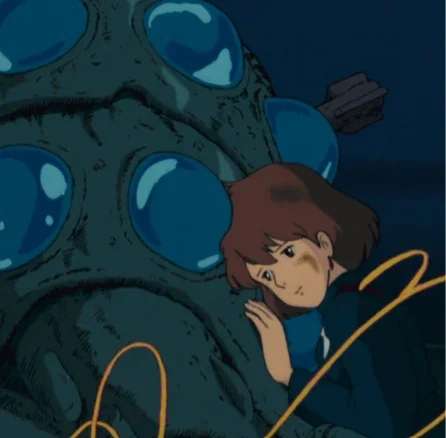
This is how the film teaches us to love. A creature so unlike us becomes lovable through the things we recognize in ourselves, not the worst of us but the best. The Ohmu are kinder than most of the film’s humans because they have been given the traits we admire in ourselves.
In Princess Mononoke, Moro the wolf raises a human girl as her daughter, and the boar Okkoto leads a clan proud, wounded and bent on revenge. They feel less like animals than old noble houses that keep grudges for generations, and even in their flaws they stir a romantic longing for noble honor.
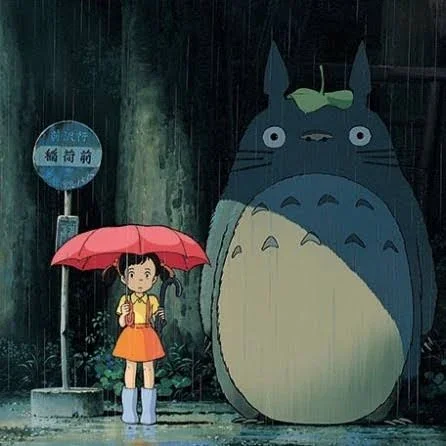
Other creatures do have a face. Totoro is round and soft, with huge eyes, a huge head and a little body⸺ what Konrad Lorenz in 1943 called the Kindchenschema,3 the baby schema, the features that make adults want to pick something up and hold it. The Kodama have it, so do the soot sprites. The Ohmu reach us through what a face represents, Totoro through the face itself and it is not a flaw at all, but the way these films make us care.
3. The Human Shape of Empathy
We put ourselves into things that aren’t us. Sometimes we do it from the outside, giving the alien a face or voice we can read⸺ the kind people mock: sci-fi aliens who are humans with blue skin, cartoon dogs with human eyebrows. As if, before we can love the strange, we must make it a little familiar.
At other times we do it from the inside when we want a creature that loves, grieves, cares and forgives. We decide the forest wants something, that the planet is wounded or patient or keeping some ancient score, and this gets called wisdom because it seems to reach past appearances. Yet side by side, the differences between them begin to fade.
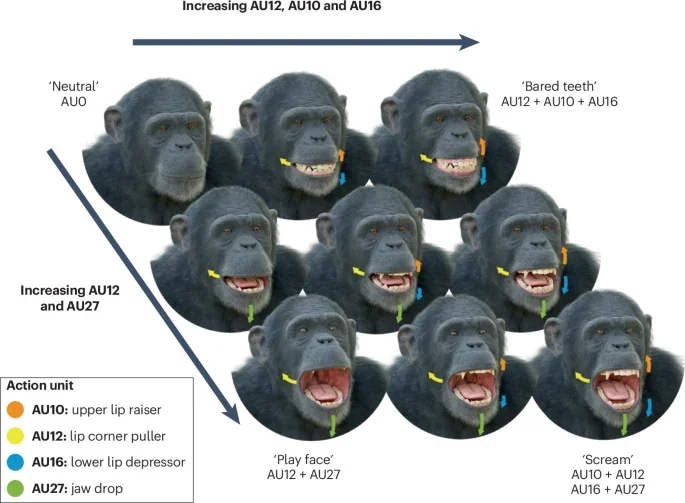
Wanting a face is a confession about yourself⸺ ”I am a primate, give me a face and I will know how to care.” Giving a creature a heart4 is a claim about the creature: that it holds forgiveness and grief. That is the bigger claim, made about the one place you can never go and check. Thomas Nagel asked what it is like to be a bat and answered that we may never know about a world seen through sounds and not light.5 The one who needs the bat to have a face at least admits he cannot get in⸻ ”give me a door, give me a face.” The one who says the bat is full of compassion has walked straight in, hung his own pictures on its walls, and called himself wiser for it.
So the face was never the point⸺ we want something we can read, and as the Ohmu prove, a row of colored lights will do just as well as a face. When their eyes go blue in that golden field, the film is not only making them easier to love. It is telling us they have forgiveness in them⸺ a far more confident thing to say about a Pillbug, even a very large one.6 Nor is this a binary. The Ohmu’s tendrils work like a hand to hold a human gesture, yet few dogs like their paws held for very long, and a monkey reads our smile as bared teeth, so why would an insect share our sense of touch?
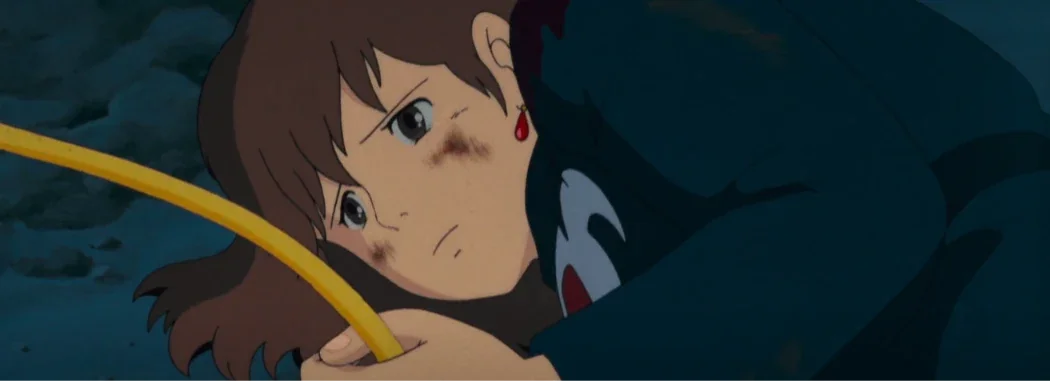
We see this across our literature. WALL-E has no words, but his squeaks and eyes are enough. No-Face’s mask never changes, yet we read his hunger in his behavior. The Ohmu have no voice at all, they speak through golden threads that reach into the mind and read the heart. In all these cases language is intent made visible.7 The moment we see intent, in a wave, a turned back, an eye that changes color, we are reading a language, and assuming a mind like ours behind it. When we say we love the Ohmu “as they are,” what we really love is what they mean to us. The road to the alien led back to ourselves all along, the face was merely a more direct way home.
Hume and Adam Smith built their moral philosophies on sympathy, Smith’s “fellow-feeling.”8 Whereas Empathy is younger than you might think. Edward Titchener coined it in 1909 to translate the German Einfühlung, “feeling-into,” and Einfühlung did not begin as a word about people. In 1873 a student named Robert Vischer used it to explain why a mountain seems to rise, a column to strain under the weight, a willow to droop in melancholy⸺ we lend shapes our bodies and moods without noticing. Only later did Theodor Lipps carry it over to other minds.9 The word for one of the gentlest things a person can do began as a word for projecting ourselves onto mountains. So it is odd to be asked to empathize with the inhuman without humanizing it. Empathy is the humanizing. That was the word’s meaning the day it was born.
Neither the Romantics nor their critics overcome anthropomorphism. They launder it, condemning projection on the surface while performing it, at enormous scale, on the interior: love, fidelity, grief, purpose, things far more human than the shape of our noses. What they offer in place of the face is no less a projection⸺ it is only better dressed. And the surer a man is of his enlightenment, the less he notices what he is wearing.
4. Of Balance in Flux
As in other Miyazaki stories, what is truly honored is not the Ohmu but the natural order they stand for. The forest slowly cleanses the poisoned earth; nature holds itself in balance until we tip it. A lovely idea, and a good lesson for children⸺ yet.
Look closer and it has a lot of us in it. What aims at equilibrium has a purpose; what restores what was taken has a sense of justice; what remembers its original state has a memory; what we can wound has feelings. These are the properties of a person, and together, of something more⸺ a god. The secular “Nature” of Romantic ecology is, with all respect, Providence: Nature is treated as a system made of agents, and then raised into an agent itself. Not just any agent, either, but a recognizably human one at that.

The ecologist Daniel Botkin traced this idea back to antiquity and found it had survived, mostly unexamined, in modern environmental science. What he kept finding in nature was not balance but change, at every scale, with no resting state the world was trying to return to. Humans seek ecological stability for our own survival rather than for the animals and plants around us.10
”It is we who want and need a balance of nature, not our nonhuman companions.”
⸺Daniel Botkin
Darwinism will not give us balance either. “Fitness” was never strength, intelligence or goodness and “survival of the fittest” (Herbert Spencer’s phrase) means fit as a key fits a lock, suited to a circumstance that is always changing. There is no middle where nature rests, because no creature has a single need or even the same needs across the flux of time, and what eases one strains another, the oxygen that lets a cell live also wears it down and kills it. The balance we see is a snapshot.
So the move from the creature to the ecosystem is not a move away from seeing ourselves. It is the same move, made LARGER. Romanticism did not take the face off the bug instead it hung it on the whole world.
5. Of Borrowed Virtues
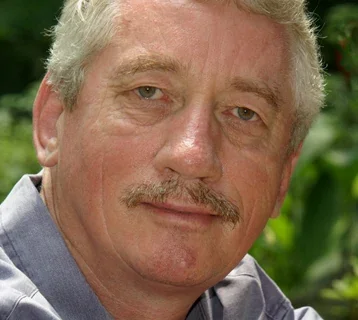
Animals do care for their young, and not only mammals⸺ earwigs guard their eggs, burying beetles feed their larvae. Frans de Waal spent decades showing that chimpanzees console one another and reconcile after fights, and coined anthropodenial for the refusal to see it. He thought that refusal is the more dangerous mistake, and he may be right.11 But the debate is framed wrongly from the start.
The particular shape of what the Ohmu do is not taken from the animal kingdom. Real Pillbugs do not stampede to rescue a stolen child, forgive the stranger who died for it, or bring her back to life. Those gestures were chosen because we recognize them as noble.
That we see ourselves in the Ohmu says something about creatures like us: slow-breeding social mammals who pour everything into a few children. Many mammals see themselves in their young. Humans go further, seeing ourselves in children not ours, in animals, even in objects, because our civilization is an inheritance not only of flesh but of spirit. We can love the Ohmu. Pillbugs cannot love us back. The Ohmu can, but only by becoming one of us.
Even among intelligent mammals, forgiveness is rare. Anyone who has rescued an abused pet knows trust comes slowly, and through habituation more than forgiveness⸺ this man does not hit. We humans carry our wounds the same way. A soldier may forgive, in spirit, the enemy he fought or the government that sent him to war by force, and still flinch at a backfiring car for the rest of his life. The spirit forgives. The flesh remembers.
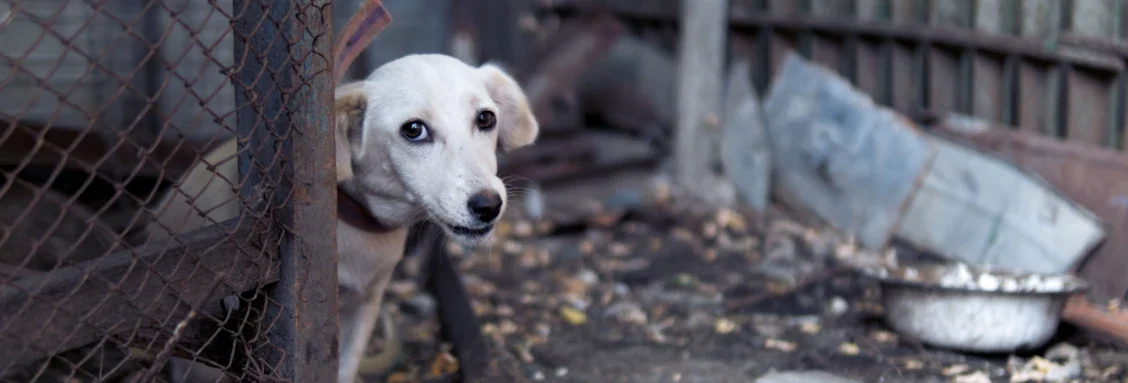
Even fear is not so basic. A bacterium does not fear. A Pillbug curling into a ball is answering a stimulus with a response that kept its ancestors alive, not afraid in any sense we would recognize. Both the curling and the fear were selected for survival, but only one is felt⸺ and to have intention on top of it, to overcome the feeling, is a bequest not of flesh but spirit.
I am not saying everything we project onto animals is uniquely ours; we are animals, and mammals. I am saying that what we find most adorable in an insect is whatever matches a mammal, as (mammals) pandas and kittens charm us by looking like human babies. What we love in nature is what is best in ourselves, measured by our standard, not nature’s.
The exceptions prove the rule. The earwig guards her eggs; bees die for their hive, their barbed sting tearing out of the body. But neither forgive the stranger who saved their child⸺ and anyone who knows a bee colony knows how inhuman it is underneath the honey. Darwin did, for he wrote of the queen bee’s “savage instinctive hatred” for her own newborn daughters, whom she kills at once or dies fighting, and of the thousands of drones “ultimately slaughtered by their industrious and sterile sisters”.12
A love that rides to war for its young and then kneels to the one who helped it is mammalian and specifically human. It is ours. We lent it. And we only love those traits in animals that are true of our own virtues, even if we ourselves fail at those virtues. The lesson is good; the loyalty of a bee is worth celebrating⸺ so long as the analogy is not taken for an equality.
Loyalty, forgiveness, promises⸺ when we feel the forest and the insects are teaching us these, what we mostly hear is our own voice coming back from the trees. That echo is not a bad thing. We are part of nature, and nature is where we first meet her laws.
6. Of Those Most Sure
The film came out in 1984, when the manga was only partway done. Miyazaki kept drawing Nausicaä for another decade, and it brought an unexpected revelation⸺ the toxic forest was made by humans.
The Sea of Corruption, its flora and fauna, even the Ohmu, were engineered by the old civilization to cleanse the poisoned earth. Humanity was altered to survive the toxic world, leaving it unable to live in the clean one the forest was preparing. In the Crypt, the old civilization preserved its technology, its purified human embryos, and the will of its masters, waiting for the earth to be remade.
Nausicaä stakes everything on the belief that the Ohmu outgrew their makers, that they came to feel, grieve and choose, which is to say they became like us. Miyazaki himself later denied that the Ohmu were intelligent, calling intelligence a human definition we project onto the world,13 yet the forgiveness the film asks us to weep at is no smaller a projection. That waking refutes everything the Crypt stands for. The Crypt assumed life could be planned and predicted. Its makers saw the people of Nausicaä’s world, Torumekians, Dorok and the Periphery and decreed they ought to be sacrificed⸺ bodies built to breathe the miasma only to be marked “impure,” and destined to die in the clean air. They built a system and judged it by the measure they built it with, as if checking a ruler with its own length.
Before the Crypt, Nausicaä comes upon a garden where a keeper tends what the old world saved of itself: its plants, its creatures, its music. She is offered rest there and refuses. The garden is a temptation because it is sealed, a world preserved by keeping it from living, the Crypt in miniature. Then she destroys the Crypt. It is a terrible act, the death of everything stored there, and she takes its full moral weight upon herself.
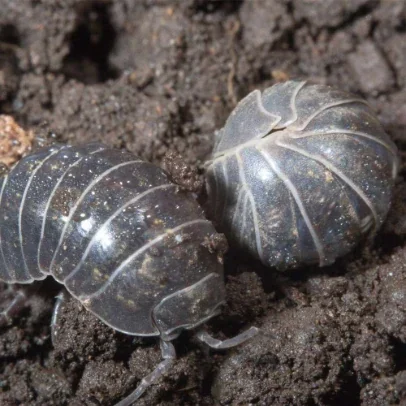
Think of the Pillbug again. Touch it and it stops. It does not choose to stop; you stopped it. It has no will.14 You could keep Pillbugs in a box for a thousand years and they would live quite well. But the Ohmu are not Pillbugs any more. They have a will.
That is why the Master of the Crypt is morally wrong, not merely mistaken. He failed twice, in prediction, not foreseeing that his creatures would wake, and worse, in certainty. No one acts without being sure enough to act⸺ that no sacrifice is worth more than what it returns. The Master was sure of something infinite⸻ a purified world, a perfected humanity⸻ and what is any finite sacrifice weighed against infinity? A people marked “impure,” an entire age of the dying, a thousand years of waiting in the dark… what is all that besides a promise without limit, it all rounds to nothing. Man is never more willing to sacrifice and to sacrifice others than when he believes he can fix the world. The surer you are of your morality, the more outrage you can justify in its name. The surest hands build crypts.
There is something of the divine here too⸺ The Crypt’s makers did not fail by rising against nature but through their natural limits. Human hubris is not a rebellion against nature, which is a common error; it is nature’s own limitation, showing itself in its most rational creature. If there is a judge above nature, it is not one of us, and the Master’s error was to take the seat. Rousseau held man good by nature and corrupted by society.15 But men build society, and fallen men build a fallen one. A lie is not made true by good ideals⸺ a misguided virtue is no virtue at all. To set the human mind apart from nature, as the one thing that wounds it, is already to look through a religious lens, and Rationalist and Romantic alike do so⸺ one says the human mind is higher and ought to be master, the other accepts the mastery but renames it tyranny, they are monstrous doubles, having an argument that need not be argued.
And on the other hand what an idol Nature makes. It is enormous against our smallness, old against our brevity, and there is no better image of what might lie beyond nature than nature’s own enormity⸺ which is exactly why it makes so perfect a substitute, and so misleading a one. Look at nature without a face, the defaced god of Mononoke, and it kills and rots.
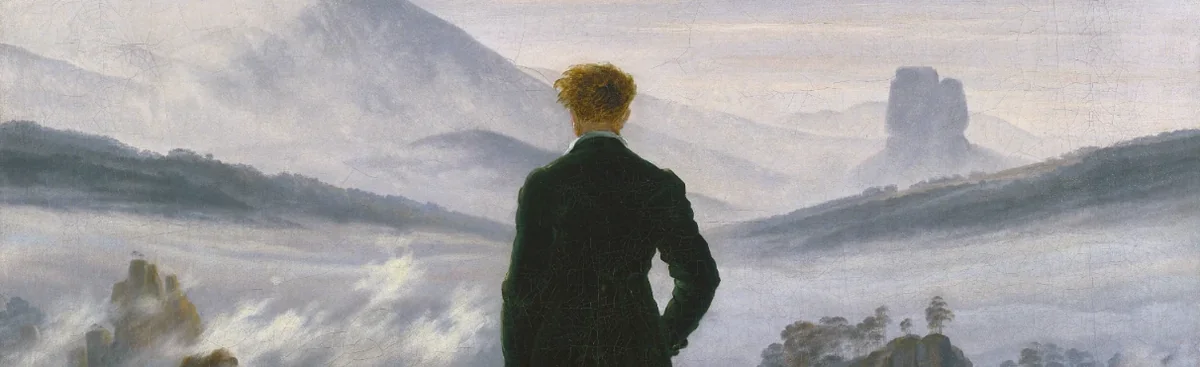
So look again at the golden field. Call it coincidence that the prophecy came true, but nobody weeps at a coincidence. We weep because it is a poetic coincidence, and a poem has a poet without which⸺ what is left is a herd of insects calming after a stampede. What moves us is a hope that reaches past nature’s mechanisms, the hope Nausicaä must have carried into the Crypt⸺ that its failed master shall no longer burden the living, and that her people and the Ohmu might one day share the world. A balance not found in nature, but given from above. Yearned for.
You need not believe any of it to see that the lens is religious. And there is irony in how some who love Nausicaä mock those who look through that lens openly, who adore God and a sense of dominion over nature. What they truly hate is hatred, what they truly love is love, and both are older than the forest of corruption.
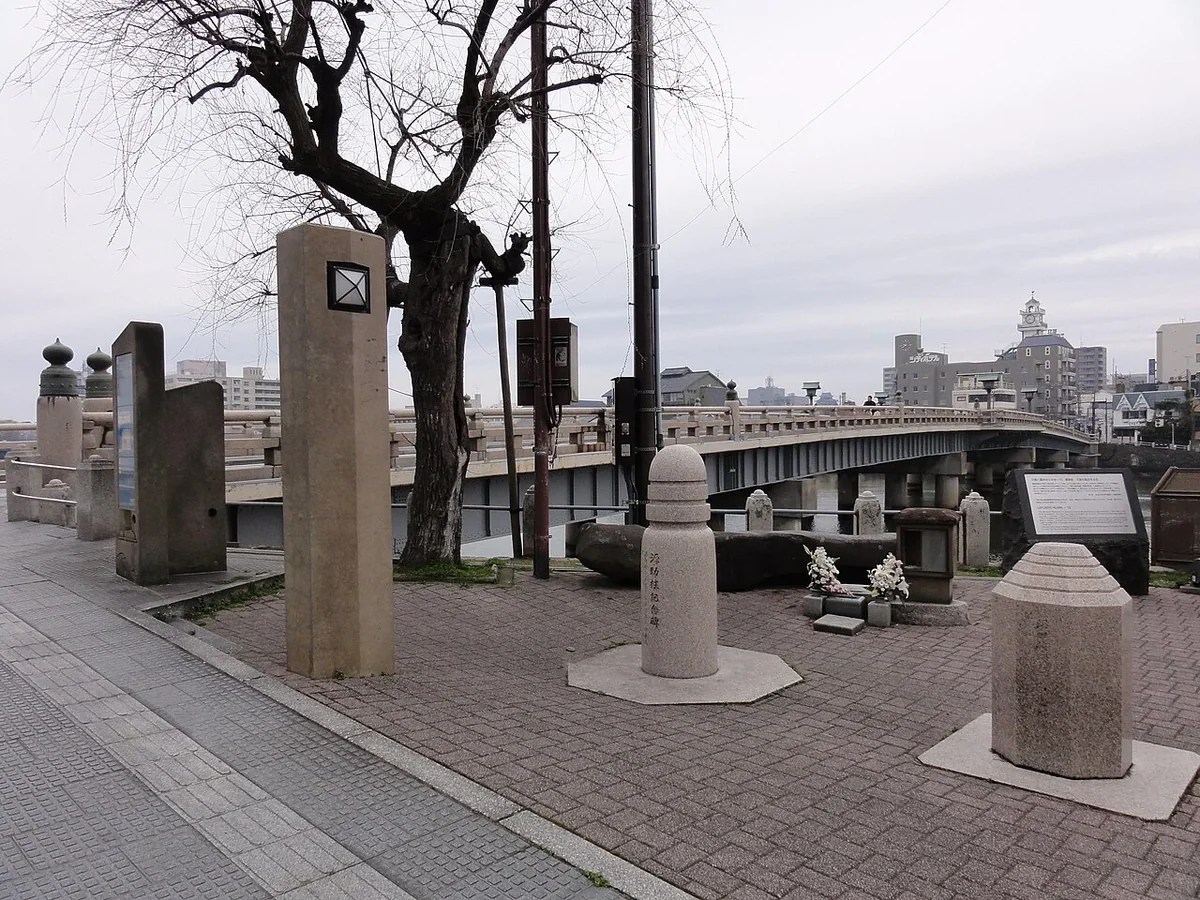
Miyazaki himself asks us to love the grotesque in the Ohmu, fourteen eyes and a rotting forest, yet turned from the grotesque in Western Christendom⸺ ”What a hideous form they made their God… I could not possibly call it beauty.”_16 He asks us to love a wounded insect and recoils from a wounded man. Yet his morality is Western, as are so many of his towns and skies. The West made the Japan he grew up in, and western war Japan entered, ended two atomic bombs dropped over her. The West failed her ideals, and yet it was not the blood sacrifice of old Shinto tradition, the human pillars buried beneath bridges and walls to appease the _Kami, which some would now call mere legend,17 that formed his philosophy, but the Western Enlightenment and the Romanticism that followed it, in virtue and error alike.
7. The Two Romanticisms of Europe and Japan
The very language by which modern Japan imagined itself as the West’s ecological opposite belongs to the history of Western ideas. Meiji Japan imported more than technology and armies; it absorbed Western intellectual and moral traditions, transformed them, and used them to reread its own past and among the things reimagined were Shinto, presented as an ancient national spirit, harmonious with nature and untouched by the violence and rationalism attributed to the West.
That timeless, peaceful Shinto was in important respects a Meiji reconstruction.18 Even the revolt against Western rationalism had a Western history⸺ Romantics had taught modern people to distrust the calculating mind and mourn a lost unity with nature, seeking wisdom in an idealized past.
Japan could turn this inheritance toward a reconstructed native tradition and find, in its own past, an answer to the civilization from which those ideas came. What had been a Western argument within Western history became, in turn, an opposition between civilizations⸺ West as domination, East as harmony. It seemed ancient only because its modern origins had been forgotten, along with the fact that the harmony was bought by the very Meiji reforms the Japanese Romantics criticized. Not every virtue of the reconstructed tradition is false, but none of it can be understood by pretending it arose outside history. What appeared to be an alternative to the West was the West’s own argument against herself.
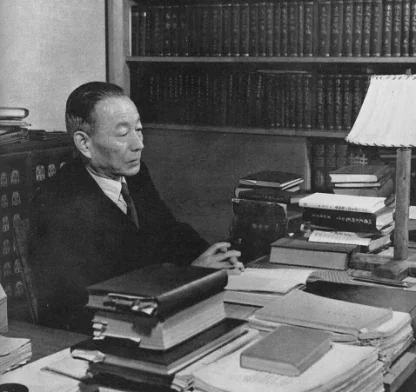
The Japanese philosopher Watsuji Tetsurō, a Romantic himself, thought the West’s pride in dominion over nature grew from an Eden in which Europe had been cradled⸺ gentle pastures had handed Europe its civilization, while Japan wrested a life from the monsoon.19 He made the old mistake of supposing that a man who lives in a garden must have been made by one. Europe’s landscape was not a gift to a passive people but the work of centuries, a gardening of the land.
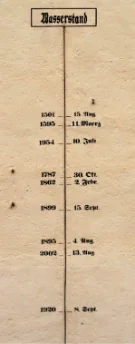
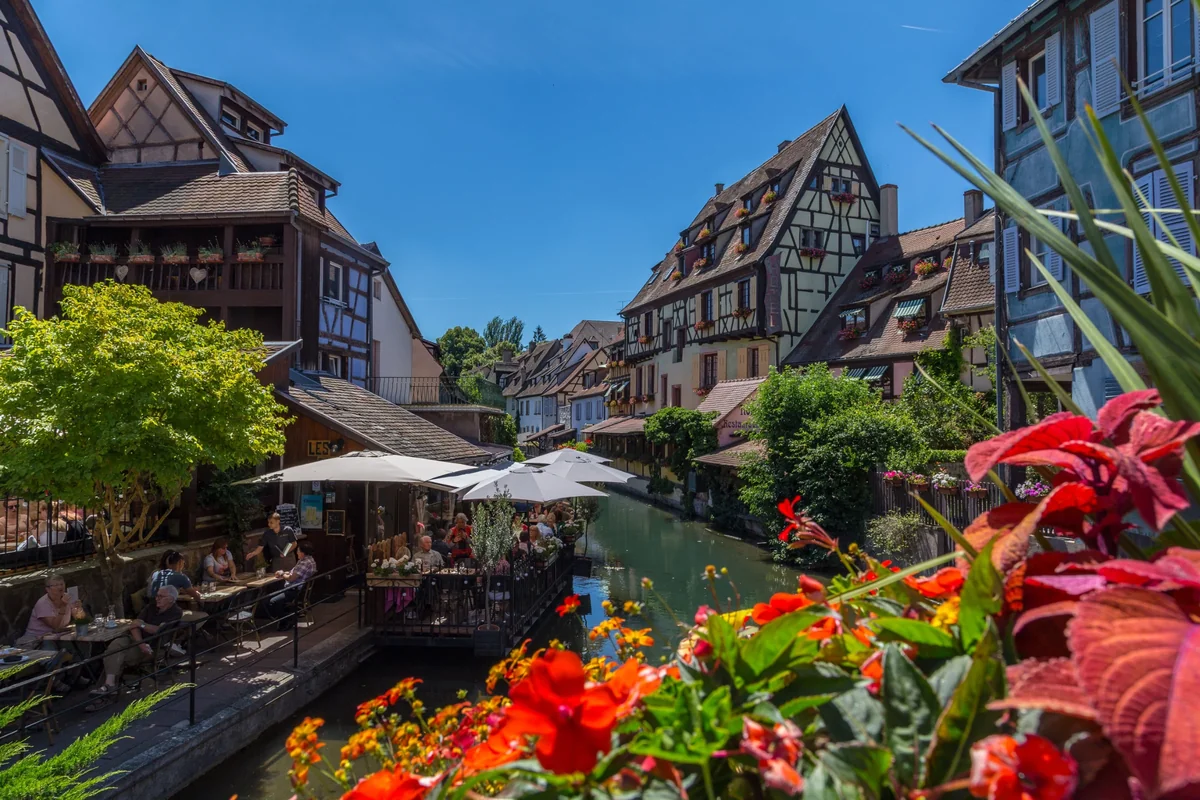
Look at Colmar, the model for the town in Howl’s Moving Castle.20 It was not bestowed by a benevolent landscape, people of Alsace held off the Lauch and Fecht with dykes. Across Central and Western Europe, flood marks on old walls testify to people who did not inherit a garden so much as spend generations making one. Miyazaki draws such places as though they had simply grown.
There is an injustice in loving these landscapes while condemning the principle that made them, the injustice is all the more stranger since Romanticism itself began among Europeans who, condemning the Enlightenment, also condemned the very people and institutions that made things they romanticized. Since the decline of the Middle Ages the state has disenfranchised the commons, peasants and monastic lands, so their legacy was assumed to be granted by mercy of Fatherland by Europeans themselves. We see the meadow and forget the marsh, the canals and forget the torrents, the ordered fields and forget the generations who worked them. When people were driven from their land and their institutions dissolved, the labor went with them, and with it the purpose that gave the landscape its form. What remains is a picture of harmony in which man seems to have done nothing at all.
”Traditionally, land and labor are not separated; labor forms part of life, land remains part of nature, life and nature form an articulate whole.” ⸺ Karl Polanyi21
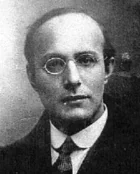
Yet this is the world Miyazaki loves to draw⸺ windmills, villages, cultivated valleys, old European cities, a beauty neither wholly natural nor wholly artificial, a home made in nature by working upon it. It is a dominion without end, carried through generations by people who know the work will never be finished, it promises not a return to some original harmony but a future open to improvement. Progress⸺
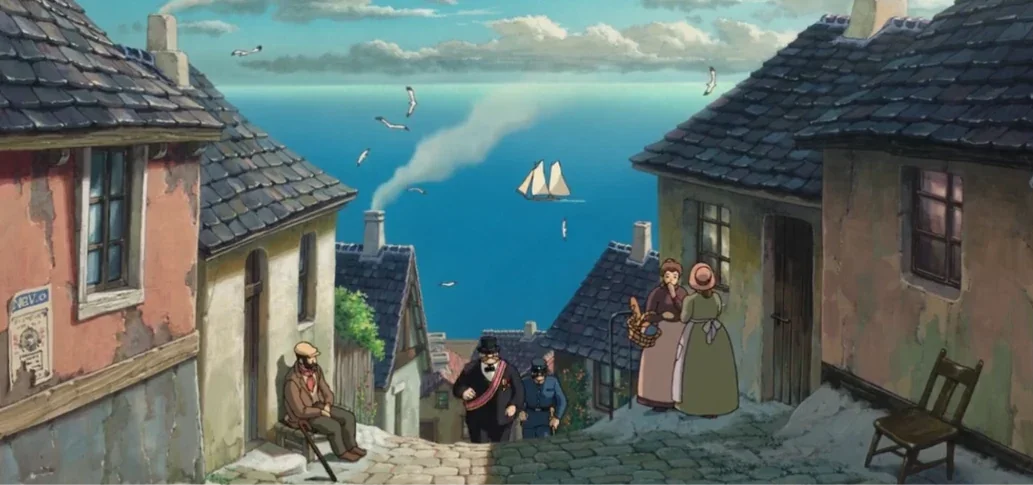
Here lies the distinction his Romantic inheritance obscures. The medieval gardener, the Enlightenment planner and the Shinto shaman all intervene in nature, to live is to intervene after all. The gardener tends a living world for those who come after him. The planner seeks a perfected, balanced system and realizes it by his maps and formulas, the shaman restores balance by appeasing the Kami, yet both Shaman and The Planner risk sacrificing the living to an ideal. By the planner I do not mean the man of tools and machines⸺ the gardener has tools too, and is glad of better ones. I mean the man who draws the finished world first and then makes the living fit the drawing.22
The Enlightenment’s error was not belief in progress, which was already the gardener’s hope, but turning hope into certainty,23 imagining reason could find a final order the world must obey. It did not escape nature worship; it moved worship from living things to the laws thought to govern them. The shaman, looking past roots and leaves to ritual laws to appease Kami and Yōkai, did the same through myth. The Romantics, rather than recover the gardener’s practice, reacted against the Enlightenment by doubling its mistake in simpler form⸺ if reason had failed, surely ignorance was bliss. They changed the object of reverence without questioning the impulse. The Romantic puts his faith in vines, forests, and organic harmony, the manifest forms of nature and Planner puts his faith in nature through its supposed laws, yet both treating nature as an order to which human life must submit.
The hands that built the wars, experiments and Crypt of Nausicaä and the hands that offered sacrifices to Shinto gods belong to the same world. The farmer who drives a field toward a calculated yield until he has salted his own fields24 and the shaman who sacrifices an animal⸺ or a human being⸺ to a god differ in method but share the error which is treating life as expendable to a predetermined order. Call that order balance, harmony or formula, the disorder is to make your neighbor answer to it, rather than judge it by what it demands of the living.25
To condemn man’s dominion over nature as such is to condemn the gardener with the planner, the labor that makes a landscape habitable with the ambition that would make it immutable⸺ and to keep admiring the landscape while doing so is to enjoy an inheritance while forgetting how it was won.
Miyazaki inherits this confusion of the Romantics. His moral imagination is deeply indebted to the West, and the landscapes he draws reveal it, yet his Romanticism teaches him to see modernity chiefly as a will to dominate, and harmony with nature as something lost. So he condemns mastery while celebrating a pastoral world whose beauty is inseparable from labor.
The Crypt is the result of this confusion, cultivation brought to an absolute end, a world preserved by preventing it from living. Miyazaki is right to reject it. But he paints the gardener’s wish to make a home into the same picture as the planner’s ambition, not seeing that his own search for harmony, like many Romantics before him, shares more with the planner than the gardener. They all sacrifice living to the Ideal.
History of Modern Japan shows the danger of the civilizing ambition he distrusts. The Tokugawa peace was a peace between lords yet there were feuding villages, hereditary castes and the rites owed to angry Kami. The Meiji state abolished all that and brought every village under one law, and in that sense truly pacified Japan from within. Yet the same state carried war abroad and built an empire. Peace at home, won from civil war and angry Kami, progress made from reforms made foreign expansion possible⸺ a peaceful nation can inflict suffering on strangers with greater efficiency⸺ but does it have to be this way?
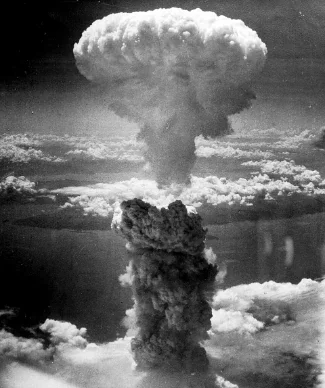
Nor is this a Japanese discovery. The West that Japan sought to emulate had built a formidable inheritance of moral argument⸺ the worth of the human person, the obligations owed to others, the judgment of power by standards beyond its own success. It also developed the means by which power could become devastating on an unprecedented scale. The destruction of Hiroshima and Nagasaki was not merely a catastrophe inflicted upon Japan. It was a catastrophe that exposed the distance between the West’s own moral inheritance and the acts committed in the name of its security and victory.
A civilization is not redeemed by the purity of its ideals, nor made meaningless by its betrayals. So I am not trying to hold a moral ledger here⸺
A moral inheritance thus must be worked like land⸺ preserved where it sustains life, corrected where it destroys, and passed on without the fantasy that men can ever finish the work. The Master wants to end history because history exposes the limits of his design. The gardener works within it, because the garden is never a finished world, but one of hope.
Miyazaki showed us the Master’s certainty and had Nausicaä bring it down, carrying the guilt for all her people herself. He knows what certainty does. He knows, at least in his work if not in his life, that he could become the Master too.
8. The Master in the Mirror
The Tolmekians invaded the Valley and killed King Jhil, Nausicaä’s father. She flies at their soldiers in grief and fury, Yupa stops her, and that matter is never raised again. We are left to assume she forgave them, but not because it is shown but because the question is never asked afterward. This is how Miyazaki avoids real conflict⸺ his pacifism works because such questions go unasked, and Nausicaä’s peace is won by miracles no man can perform. I do not mean this as criticism⸺ that is what fiction is for, to show a peace we cannot have yet, so that we might hope for it. One day we ought to be more like Nausicaä. Not escapism, but hope.
To reach out in Hope, even for a miracle.
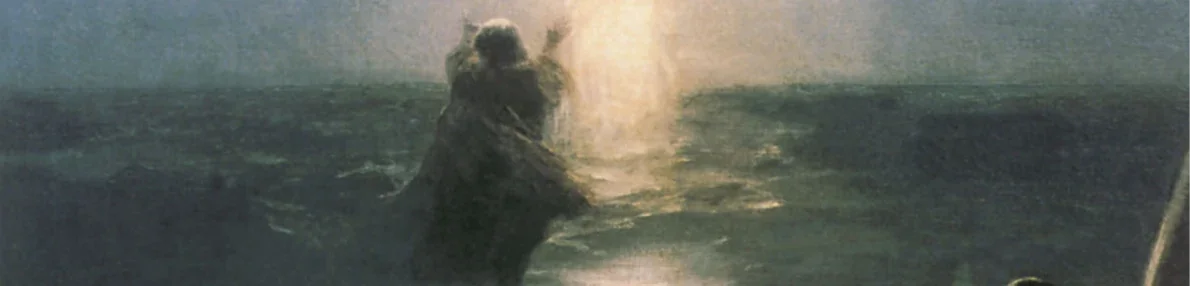
But we ought to yearn for the world as it should be without resenting that it is not. The man discontented that reality is not solved as easily as fiction begins to scoff at those closest to him for not behaving like Lord Yupa or Nausicaä. His pacifism becomes an ideal that flatters his morals as it mocks the people nearest him⸺ and if a man is so angry when people fail his fictive ideal, how much angrier would he be with more power? Miyazaki is flawed in this way, as all of us are. In a way, he is his own Master of the Crypt, without the same kind of power.
His ideals are absolute, not grounded, and so they collide. Peace collides with justice⸺ the Valley keeps its peace in the silence of its murdered king. Love of mankind collides with love of the man in front of you. He critiques his ideals in Nausicaä, yet returns to them film after film⸺ what he rejects is the solution. Nausicaä is right to refuse Shuwa and its only gardens are frozen ones, whereas the tended garden, the very balance his films yearn for, has no place. Strange, for Nausicaä is herself a gardener⸺ in the film she keeps a secret room beneath the castle where she grows the plants of the Sea of Corruption in clean water and soil, and they are not poisonous at all.26
The Master is more than a figure of technological arrogance. His danger is taking a real good and making it absolute. He would abolish suffering by deciding what life may exist, and preserve humanity by denying the living any say in what it becomes. The ideal is so pure that the people it exists for must be remade to fit it. Care ends in coercion, because he cannot bear the distance between the world as it is and the world as he has decided it ought to be.
The idealist faces the same danger, seeing a real evil and imagining its opposite must be good without remainder. Miyazaki is tempted to this, to let the planner’s domination condemn the gardener’s dominion, to see war and demand a peace that admits no conflict. But the gardener cannot promise a world without death, nor the moral man a world without wrongdoing. Both must act in a fallen world that resists perfection, the world Miyazaki called “anti-beauty”,27 Oh, why indeed do they make their god so hideous? The question is not whether we can preserve the good from all corruption, but whether we can pursue it without licensing ourselves to destroy whatever does not conform with it.
We ought to feel horror of the Master but it is equally dangerous to imagine we escape it simply by turning from mastery toward an ideal of harmony, it’s a horseshoe that avoids responsibility.
René Girard would say society gives us an idol, an image of how things ought to be, and then a scapegoat when the world fails to match it28⸺ the perfect pacifist society under contemplation must fail as violent one did. So idealism and pessimism in Miyazaki are two faces of one coin, what Girard called a monstrous double, seen in many idealists before him and in many of us. They are in one person what Idealists and Rationalists are in society, a monstrous double, asking questions that seem opposite while agreeing in their foundations. Miyazaki burns his ideals for the same reason he idolizes them, and that is not maturing but decomposition: whatever bears our moral expectation, harmony with nature or harmony among men, turns in the end into its monstrous opposite.
And here I must speak of Miyazaki as one speaks of a father. By many accounts, his son’s among them, he has been a hard man to live and work beside. I used to think this a contradiction, the gentle artist and the sharp, absent man. Now I think it may be his philosophy’s own conclusion. In T.S. Eliot’s Murder in the Cathedral (1935), Becket names the last and greatest temptation⸺ ”To do the right deed for the wrong reason.”29 Miyazaki’s love of life is the right deed, and his films are rooted in truths⸺ but a love fastened to a mirror rather than what the mirror shows slips loose under strain, and slips loose on whoever is nearest. If the father erred, it was not in loving too much, but in loving the image a little more than the faces around him. I am not sure I would have done better.
And yet the answer is simpler, and he knows it, for he has shown it. Nausicaä does not love peace in the abstract. She loves the one in front of her. Love thy neighbour. Recognise the fallenness in man and love him all the same.30
9. To Be A Gardener
So there is nothing wrong with loving the Ohmu. What we love in them is human, which is exactly why the love is good. The wrong comes when that love is turned on people. To look down on a neighbor because he cannot feel for a fungus, or for your version of a better world, is not enlightenment. It is disliking the man beside you while claiming to love something far away. Dostoevsky has a doctor confess it⸻
”I love mankind,” he said, “but I am amazed at myself: the more I love mankind in general, the less I love people in particular, that is, individually, as separate persons.”
⸺Fyodor Dostoevsky, The Brothers Karamazov31
Those who speak for Nature against Humanity are the same people who speak against their neighbors in the name of Humanity⸺ the abstract always preferred to the immediate.
To love another truly is to love him sacrificially⸺ to expect nothing in return, and to bear the cost oneself. How is it different from romantic? Doesn’t he too love sacrificially? Well⸺ Its corruption keeps the shape and moves the cost. It asks real neighbor to love, at his own expense, a conceptual neighbor who does not exist⸺ Humanity in place of this particular man, Nature in place of Humanity. So instead of turning his own cheek, it demands the cheeks of others, and resents them when they cannot. It has every look of sacrifice, except that someone else is sacrificed for an idea. It is the fruit of knowledge taken over the fruit of life⸺ to know what love is, and be spared the doing of it.
We have sacrificed the end for the means. The Ohmu are a lesson. A fiction that reveals a moral truth is a precious thing. But to idolize the lesson at the expense of the truth it carries, and then to use the idol as a stick, is to fail the lesson entirely. Nausicaä is a wonderful film, but to make the Ohmu a high place from which to look down on other people is to miss the lesson. The surest hands build crypts. What the neighbor needs is not our enlightenment but our compassion, com-passio, to suffer with him.32
The only way any of us learns to care about anything may be by seeing ourselves in it. The failure comes when likeness becomes a condition, when only the cute get saved. It is good that our stories make cute what is not, to teach moral truths; but the truth is why we loved them in the first place.
I believe there is truth, and that it is not a story we tell to make sense of nothing. Yet reason alone does not let us know it. Reasoning is natural; even a machine can follow rules. What is strange is our ability to tell truth from untruth, rarer even than language and not fully explicable, bound up with a will that does not merely obey nature’s laws but understands them. Without it, reason is only obedience at its finest.
So we ought to reject the old dichotomy. If man can know truths, he ought to be neither nature’s oppressor, taking what he wants, nor nature’s subject, worshipping what he fears, but its gardener. Nature is not a god, and it is not a quarry. It is a garden. In Nausicaä’s world the garden is a temptation. It need not be. Miyazaki himself said as much, the year the manga ended⸺
“We are like midges, who can’t survive if the water is either too clean or too dirty. We live between extremes. … Humans cannot live totally pure lives. To shoulder the burden of work is to be human.” ⸺Miyazaki, interview with Ryo Saitani, Comic Box, January 199533
A true garden is not nature stopped, but nature tended.
There is something beautiful and true in Ghibli, precisely because the Romantic’s original worry is real. Moral concern can be parochial⸺ beings are ignored, exploited and destroyed because they do not look like us. So the answer isn’t to stop seeing ourselves in things, but to do it more patiently, and further out. To look at a fish long enough to notice the fear in it, to watch a beetle struggle on its back and feel the effort in your own shoulders, to keep correcting what you project against what you learn. We grow not by throwing away what we saw first, but by seeing more. A mirror is for seeing. It is not for worshipping, and certainly not for mocking those who were never handed one.
Some anthropocentrism is inescapable in any ethic; we cannot value from anywhere but where we stand. What environmental critics really object to is better called human chauvinism:34 the failure of the gardener who, in hubris and greed, salted his own fields. He too was certain he knew best.35
I love these films. I love the old Romantic poets too: Wordsworth rowing a stolen boat at night and feeling a mountain rise behind him as if following; Shelley asking the west wind to make him its lyre.36 None of that has to go. It is how a small, short-lived animal learns to find himself in a world much larger than he is. We feel our way into things. We give them faces. We imagine their grief. And sometimes, because we did, we leave them standing.
Fiction is good so long as it reveals something true, and so long as we do not mistake it for the thing it reveals. We can love nature rightly only if we first love our neighbors rightly and written word is the last thing anyone should be self-righteous about. I, too, am only writing words.
It is easiest to love what you have no consequence over, and to blame others for not loving it as you do, for a love that never has to prove itself is the easiest love of all. Whether a man strays from the truth by a face, a feeling or a grand abstraction, he has strayed all the same. Notice that everyone scoffs at someone. The Romantic scoffs at the man who needs a face. Miyazaki scoffs at the Master of the Crypt. Others scoff at Miyazaki. We are all alike, in a cycle of hatred excused always by the love of something. Worse than any of us is the one who only mocks, for his mockery loves nothing at all, not even badly. That is why we ought to love Miyazaki, errors and all. That is why we ought to love one another.
Conclusion
Next time you lift a flowerpot, the Pillbugs will still be there. Grey, shiny, going nowhere in particular. One of them will curl up if you touch it.
It doesn’t know about the Ohmu. It doesn’t know it was once made the size of a hill and given colorful eyes and golden tendrils and a heart that could forgive. It doesn’t need any of that.
But you might look at it a little longer than you would have. And if you do, it will be partly because you saw it carry someone across a golden field. Which is to say, partly because, for a moment, it had your face.
I don’t think there’s anything wrong with that.
Somewhere a girl knocks on a shell, and it rings hollow, and she smiles, because she knows what it is waiting for. Fill it. Only don’t tell your neighbor it was full before he came.
Notes
- By many accounts, including those of his son Gorō and of documentaries filmed inside his studio, Miyazaki has been a demanding and often harsh presence to colleagues and family. In §8 I argue this is less a contradiction of his philosophy than a consequence of it, a fuller analyses belongs to a separate essay, alongside Victor Hugo and others. Gorō put it most plainly on his blog in 2006, giving his father “zero marks as a father but full marks as a director of animated films” (“Full Marks as a Director,” https://nausicaa.net/miyazaki/earthsea/blog/blog41.html). The documentaries The Kingdom of Dreams and Madness (2013) and Never-Ending Man: Hayao Miyazaki (2016) show the studio side. ↩
- Margaret Talbot, “The Auteur of Anime,” The New Yorker, January 17, 2005, https://www.newyorker.com/magazine/2005/01/17/hayao-miyazaki-anime-studio-ghibli-profile. Discussing his wife’s approach to gardening, Hayao Miyazaki remarks, “when she gardens, it’s like a holocaust,” explaining that “even the weeds—poor plants—she just yanks them out.” He calls this approach “not ecological at all” and “fascism,” before conceding, “I can’t do it. I’m not the farmer type, so I just complain.” ↩
- Lorenz set out the baby schema in “Die angeborenen Formen möglicher Erfahrung” (1943): for features that trigger our instinct to nurture. ↩
- In the sense of moral truths, not the biological organ. ↩
- Thomas Nagel, “What Is It Like to Be a Bat?” (1974). His point is that even complete knowledge of how echolocation works would not tell us what it is like, from the inside, to be a bat. ↩
- To be pedantic, the Pillbug is no insect but an isopod, which a kind land-dwelling crustacean. ↩
- Paul Grice put it in a sentence⸺ to mean something is to intend that someone recognize what you intend. H. P. Grice, “Meaning” (1957). ↩
- Hume develops sympathy in A Treatise of Human Nature (1739–40); Smith opens The Theory of Moral Sentiments (1759) with it, as the “fellow-feeling” by which we imagine ourselves in another’s place. ↩
- Titchener’s coinage is in Lectures on the Experimental Psychology of the Thought-Processes (1909). Vischer’s dissertation was Über das optische Formgefühl (1873), and Lipps carried Einfühlung into the psychology of other minds around the turn of the century. The straining column is Lipps’s own famous example, the Doric column. ↩
- Read more, Daniel Botkin, “The Myth of a Constant and Stable Environment” (2012), https://blog.oup.com/2012/10/myth-of-environmental-stability/. He makes the longer case in Discordant Harmonies (1990). ↩
- De Waal lays out the term in “Anthropomorphism and Anthropodenial” (1999), arguing that refusing to see humanlike traits in animals is as much a bias as projecting them. ↩
- Charles Darwin, On the Origin of Species (1859). Though outside of scope of this essay, modern studies show that queen elimination during swarming can involve fights, destruction of rival queens before emergence, or departure with a secondary swarm; the phenomenon varies with season and food availability, If you’re interested in the complicated biology see Thomas D. Seeley’s Honeybee Democracy (2010) which describes how swarms and queens actually behave. ↩
- Hayao Miyazaki, interview by Ryō Saitani, Comic Box (January 1995), see note 34. He says the Ohmu’s behaviour wasn’t intelligence, and that humans have decided intelligence is theirs alone and projected that definition onto the world. My point is narrower. Whatever he denies them in intellect, the film grants them in heart. ↩
- Will as in voluntas, which is not mechanical reaction. ↩
- It’s a common aspect of enlightenment mythology, check Rousseau’s Emile (1762), I’d suggest reading Authors such as Dan Edelstein and Ter Ellingson for more. ↩
- Miyazaki Hayao, 「ファンタスティック・プラネットに思う」 (1981), in 『出発点 1979〜1996』 (1996): 「何というおぞましい姿を神にした事か……ただただあきれはて美などとはとても言えません」 ↩
- The oldest record is the Nihon Shoki (720), in which, under Emperor Nintoku, Kowakubi of Musashi is offered to the river god for sake of Mamuta embankment. Legends of hitobashira, “human pillars,” then attach to bridges, dams and castle walls across Japan, Matsue’s Ōhashi among them. Excavation has turned up candidates, e.g. In 1925, repairs beneath the Fushimi Yagura of Edo Castle uncovered some twenty skeletons, several with old coins laid on their heads. Kita Sadakichi argued they were human pillars, Kuroita Katsumi denied it, and later castle historians suggest an older temple graveyard. In 1937 at Saruku-yōji in Niigata, the village of a landslide hitobashira legend, a man was found seated in a large clay jar. Niigata University dated him in 1961 to the late Kamakura period, a man in his forties, perhaps a wandering monk. In 1960 a seated body in a tub coffin, under a rusted helmet, was found beneath the walls of Hiji Castle in Ōita. The remains were discarded, and the identification rests on a students’ record and the town museum’s reading of it. See Kita Sadakichi, Hitomigokū to hitobashira (Kawade Shobō Shinsha, 2008, first published in Chūō Shidan 11, no. 2, 1925), the Tōkyō Asahi Shimbun of 30 June 1925, the Niigata Prefecture Jōetsu Erosion Control Office on Saruku-yōji, and the Mainichi Shimbun of 3 October 2023 on Hiji Castle. Historians have argued that many individual accounts are legend, and each of these finds is disputed. But to file such rites under “local practice” rather than Shinto is to read back the Meiji state’s centralised definition of Shinto, which was built on ideology, not tradition. See Kuroda, Hardacre and Josephson in note 18. ↩
- Kuroda Toshio’s “Shinto in the History of Japanese Religion” (1981) argues that Shinto as an independent, timeless religion is largely a modern construction. Helen Hardacre’s Shinto and the State, 1868–1988 (1989) and Jason Ānanda Josephson’s The Invention of Religion in Japan (2012) are some other sources that trace its reconstruction. ↩
- Watsuji sets Europe’s “meadow” climate against Japan’s “monsoon” climate in 『風土』 (Fūdo, 1935). ↩
- Miyazaki sent a team to Alsace to scout the colours for Howl’s Moving Castle (2004). Margaret Talbot, “The Auteur of Anime” (2005). ↩
- Polanyi’s work is very prescient, particularly his socialism which he shares with Miyazaki; Karl Polanyi, The Great Transformation (1944). ↩
- James C. Scott calls this “high modernism” in Seeing Like a State (1998): schemes that redraw forests, farms and cities to fit a planner’s map always fail the people who live in them, I’d highly recommend. ↩
- A hope turned to certainty is no hope at all, but delusion. ↩
- This is reference to Salt based fertilizers in farming and their overuse, it is not an actual proverb as newer farming analogies have not made it into contemporary literature, I think it’s nonetheless suitable here. ↩
- By disorder I mean an inversion of order, nature can only be loved through people closest to us first whereas to love abstract over the apparent is mere excuse to not love at all. ↩
- Nausicaä of the Valley of the Wind (1984). ↩
- The medieval image of Christ, of which Miyazaki wrote 「美などとはとても言えません」, “I could not possibly call it beauty,” in 「ファンタスティック・プラネットに思う」 (1981). See note 16. ↩
- Mimetic desire, the scapegoat and the monstrous double, etc. read René Girard. ↩
- T. S. Eliot, Murder in the Cathedral (1935): “The last temptation is the greatest treason: / To do the right deed for the wrong reason.” ↩
- That is, one does not need man to be naturally perfect to love him. See Matt. 22:39, Luke 10:25–37. ↩
- Fyodor Dostoevsky, The Brothers Karamazov (1880), Book 2, Chapter 4. ↩
- From Latin compassio, com- (“with”) and pati (“to suffer”). ↩
- Hayao Miyazaki, interview by Ryō Saitani, Comic Box (January 1995). The full interview is translated at https://comicbox.co.jp/e-nau/e-nau.html. ↩
- Tim Hayward’s work is relevant here, though I part with him where he extends human chauvinism, which is plainly wrong, into “speciesism,” a move that defeats (I believe) his own premise that some anthropocentrism is inescapable. His argument is in “Anthropocentrism: A Misunderstood Problem” (1997). ↩
- See note 24. ↩
- Wordsworth’s stolen boat is in The Prelude, Book 1. Shelley’s “Make me thy lyre” is from “Ode to the West Wind” (1820). ↩